Sunday, March 20, 2011

Here's to the glorious 49th!


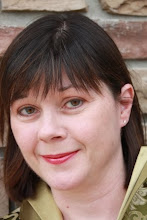
 Today is my birthday. I’m 49 (really! I was born in 1962).

Am I worried about getting older? Nope. Of course, I’d love to think when people meet me they’ll tell me I don’t look a day over 35, but I’m happy with the experiences, memories and the life I have at this moment.

I remember turning 25, and feeling a sense of panic that I hadn’t done anything with my life yet, that the years were slipping past too quickly. I can smile at that now, but it was a crisis then.

At 39, I remember thinking I was at the perfect age. My kids were still young, but everyone was toilet trained, in school, and I was extremely happy being a stay at home mom. I did a lot of volunteering at the school and as a Cub Scout leader, and I loved every minute. I had time to garden, bake, paint, and it was then that I began to write fiction.

I’d always wanted to write a novel. Composition, English and History were my favorite subjects in school. My highest marks were for anything creative or written. Good thing, since math was baffling to me. I eventually made my career in advertising copywriting, and then in direct marketing. I started my own freelance business, so I could stay at home and raise my children.

But through all this, I dreamed of writing novels, making up stories, carrying readers away to the fantasy places that filled my head, making the historical time periods I love come alive. Every other kind of writing just felt like preparation for that.

Of course, carrying anyone anywhere requires bravery and determination. It took a while (as I suspect it does for most writers) to develop a thick-enough skin and the courage to show anyone my fiction. I had no problem with changes—as a business writer you learn not to fall in love with your own words, because the client is going to want to change them. I once did a project for a government department where thirty people reviewed one document I’d written, and they all had suggestions! My first tentative fiction submission to an agent met with rejection. I was too inexperienced to see that it was a ‘good’ rejection, and said the work had merit, and wished me the best. I only saw the rejection, sadly, and went back to writing in secret.

When we moved from Ottawa to Calgary in 2004, I was responsible for driving my children back and forth to school in the city, which amounted to several hours a day in the car. A full-time job was out of the question, and I decided the time had come to get serious about writing a book.

I joined the wonderfully supportive Calgary chapter of the Romance Writers of America. Our members take writing and submitting seriously. They actively work on their careers and the goal of becoming published authors. They share their rejections, their triumphs and their ideas. I began entering contests and sending things to publishers, and pitching when the opportunity arose. There were more rejections, but I learned to take the positive from each one, and move forward.

I was also fortunate enough to find three wonderful critique partners to work with, too. They helped me fix what was wrong and improve enough to get published. There are times when you can’t see the flaws in your own work, no matter how often you re-read and edit it, but a good critique partner can see it at once.

I made a rule that whenever a manuscript was rejected, it must be submitted somewhere else within a week, whether to a contest or the next agent on the list. I read craft books, attended workshops, listened to lectures, honed query letters and learned the technique of writing a decent synopsis.

I was in Edinburgh in 2009 when I got an e-mail from agent Kevan Lyon saying she was interested in working with me.

Kevan sent the manuscript was sent to ten publishers. After a flurry of interest, I received two offers, and chose Avon.

And so, just nine days after my 49th birthday, my first book, SECRETS OF A PROPER
COUNTESS will be in stores.

Through the whole process I’ve come to believe that things happen when they do for a reason. With two very busy kids in multiple school bands, advanced level classes, and a dozen other activities, I couldn’t have managed a writing career and a busy family a few years ago.

Now my eldest is in university, and my youngest is entering her last year of high school, and I have time to devote to my career. Part of my desire to be published stems from wanting to make them proud, to show them dreams can come true if you do the work, keep learning, and don’t give up.

That’s the secret to luck and the fountain of youth, all in one, and it’s only taken me 49 years to find it.

So I’m not worrying about getting old today. I’m looking forward to the future, wrinkles and all.


Tuesday, February 15, 2011

Writer's Block


February 15, 2011
(42 days ‘till the release of SECRETS OF A PROPER COUNTESS on March 29)
Writer’s Block

In the past few months, busy with activities for my second book and the promotion of my first, SECRETS OF A PROPER COUNTESS, I’ve been suffering from a bit of writer’s block. One thing I’ve discovered is that writer’s black is seldom about the writing. It’s usually about other things in our lives that keep us from getting the words on the page.

I never have trouble thinking of things to write about, and if I don’t write for a week or two, or even a few days, the stories start downloading themselves into my dreams at night. I’m crabby and out-of-sorts until I get back to work.

But right now, my son is at university in Russia for six months. I worry if I don’t hear from him for a few days, and that affects my ability to concentrate on writing. I know he’s doing fine (thank heaven for Skype), and loving every moment of the experience, or I’d hear more often, but mothers always worry.

Learning how to promote my debut release (and myself, a very shy writer) has been fun, but stressful. There are so many ways to get the news of a new book out there, and I’ve had to learn things like Twitter, and blogging and how to use Facebook (a work still in progress, but coming soon! According to a recent survey by my publisher, Harper Collins/Avon, 70 percent of readers said they look for new book information on Facebook first, so look out, social media, here I come, and we’re going to find each other quite a challenge!)
 It’s always been hard for me to ask people for things, and setting up a blog tour was torture from that perspective, but it’s nice to get to know the reviewers and romance readers out there! I’m looking forward to my first set of reviews, positive or negative, though I hope readers will love reading SECRETS OF A PROPER COUNTESS as much as I loved writing it.

Ah, back to writing. I haven’t had a whole day to simply sit and write for several weeks. I squeeze in an hour or two here and there, but the luxury of knowing there’s no one looking for me but my characters has been absent. No wonder I’m grumpy, and grumpy is the polite word for it. 

 In addition to doing publicity for SECRETS, I also have a big volunteer commitment coming up. My husband says my arm is defective—when someone says the word ‘volunteer’, my trick arm shoots skyward. For me, volunteering is a complete commitment to the best of my ability. If I offer, I follow through. Unfortunately, I have an unusual ability— I can build almost anything out of cardboard or paper mache, which is only useful when it comes to things like decorating a cavernous high school gymnasium for a dinner dance. One year I built a 14-foot lighthouse for this event because someone said it couldn’t be done. This year the theme is New York, which is terrific, given that this year’s RWA National Conference, my first, is in New York this year. I’ve decided to build some ‘windows’ to hang on the gym walls. Each will be 3-D and lighted from behind. One will be a brownstone window, complete with a fire escape. The second will be a jazz club, complete with a neon sign made from glow sticks, though I won’t know if that will work until I try it. The third will be the front of an old fashioned cafe. All the how-to’s are percolating in my mind just like a story plot. Did I mention each decoration has to be collapsible so I can transport it in the back of my small station wagon? It has to go up fast, and come down easily.

So at this moment, more than anything else, it’s all these activities that are blocking me from writing. The story-telling part of me is growing impatient. The heroine is nagging me in my sleep to get on with it. It’s not you, I tell her, it’s getting past the housekeeping activities in a writer’s day and getting to do what I love, which is of course, writing stories.

It’s not that stories spring into my head fully formed and ready to fall on the page in graceful piles of elegant prose.  I usually haven’t got any idea exactly how the story is going to end when I start writing it. It’s like walking in the dark. Beyond the beam of the flashlight lies an unknown world. Yet with each step forward, more is revealed, until you finally reach your destination. That, by the way, is one of the most important lessons I ever learned as a writer. I have dozens of unfinished manuscripts in my basement from years ago. When the going got tough in each story, I flitted off to the next idea, instead of working through the darkness and getting to the next step. When I learned to persevere, to think it through and keep writing, I got books written, and eventually, published.

There’s no point in sitting at the computer and staring at an empty page. I do some of my best work while I’m walking my dog. Our favorite spot is down by the Bow River, a wild strip of land between a gravel pit, and the river itself. There’s pair of bald eagles that perch in the same tree every day and supervise the people and dogs that pass beneath them. There are crows, wild ducks, Canada geese, pelicans, and coyotes, and even a rumored cougar. It makes a perfect place to think, a bit of peace and fresh air away from the computer and cell phones. There’s nothing to do except walk and think. I’ve worked out some of my most tangled story problems on our walks. Kipper (my chocolate lab) doesn’t mind. He does his own reflecting and discovering.

As we go, I can imagine what if, and work on plotting. What if my hero had a secret he couldn’t share with his family? What if they secretly knew? What if they didn’t, but the heroine did? I can wander down each potential story path as we, well, wander down the path under our feet. Solutions always come, and some days it seems like magic.

So tell me how you handle writer’s block, because no two writers are the same. We’re like snowflakes, each of us unique. Can you tell it was snowing when Kipper and I went out today?


Tuesday, September 14, 2010

Where do you get your ideas?


People seem fascinated by the whole process of writing. Writers are baffling creatures to many, and there is such a wide variety of reactions when I tell people what I do.

Some people talk about their own aspirations to write a book, and the brilliant idea they have that would be an instant bestseller if only they had time to commit it to paper.

Others ask, “where do you get your ideas?” Actually, that question can come phrased in two ways, with two meanings, depending on the emphasis. It can be genuine interest, or the kind of question you’d ask someone who’s slightly demented. “Where do you get your ideas?”

It’s an intriguing question, no matter how it’s put.  

The life of a romance writer isn’t easy. Readers crave realistic heroes and heroines, but they want a story that’s luscious, heart-pounding fantasy. The emotional journey must be satisfying, the sex amazing, the setting exotic. It must pull people out of their everyday world, yet offer something they can identify with. A good story must have the familiar happy ending, but it must be new. 

That’s a tall order. 

Imagine going into a new restaurant and ordering your favorite dish, You want it perfect, familiar and expertly prepared, but different too, with a dash of spice and sweetness in the sauce, and a surprise burst of flavor to make it a breathtaking, unforgettable experience. A good story has the same requirements. 

They both start with a basic idea or recipe, and come to life in the hands of a master chef. 

Now, I must admit that I write historical romance because I love history. I also love a good story, and the past is full of them – great legends, real life heroes, brave women, and incredible love stories. And the costumes are fantastic. Who can forget Colin Firth as Mr. Darcy in A&E’s Pride and Prejudice, standing before his estate, watching longingly as Elizabeth Bennett drives away in her carriage? I get shivers just thinking about it! 

While real history offers writers a rich tapestry, imagination can dramatically improve the duller parts of history. Imagine if one of the sober, middle-aged statesmen at World War II’s Potsdam conference had a love affair with an enemy that could compromise everything he stands for. It might have happened. Not comfortable casting the honorable President Roosevelt in that role? What if the hero was a close advisor to the President, with access to every American secret, and he was the one who fell in love with a beautiful Russian in Stalin’s service? See how ideas grow?

But where do ideas come from? A&E. Jane Austen. The perfect fit of Colin Firth’s breeches. Faces on the subway. True stories. Lies. Trees. I named all the trees on my way to school when I was little, invented homes in the woods where elves lived, and imagined hidden doors among the maples that led to the past. 

At the airport, I look at my fellow passengers and wonder what their love story would be. Some perfectly ordinary mother with a fractious baby might end up imagined as a desperate woman flying off to confront the father of her late sister’s illegitimate child, only to discover her sister was entirely wrong about the man, and he’s her Mr. Right. 

Sigh. So many places to find the germ of an idea for a fabulous story, so little time to write them all… 

The idea for my upcoming debut novel Secrets of A Proper Countess came from wanting to write something lighthearted and sexy over the summer, something without research or complication. It was going to be a story about a rake who seduces an anonymous lady at a masquerade ball. In this Cinderella tale, the rake would be spoiled for any other woman, and would be determined to find his lady love among the thousands of women in London. 

Well, that was the original idea. It wasn’t satisfying enough, or rich enough, though. It was ordinary. The story needed a twist, a hero readers could fall in love with, and a heroine that women could see themselves playing, if they ever made a movie of the story. 

I hate predictable. I feel let down when I can guess the outcome of a movie or a book before it’s even halfway through.  Perhaps that’s an odd admission for a history lover, since I’m a sucker for any new biographies of Eleanor of Aquitaine, or Anne Boleyn, and I certainly know how they’re going to end.  Still, nothing is more thrilling than a book that makes me gasp, curls my toes with wicked delight at the unexpected, and keeps me up reading all night. 

In a romance, where the ending is always happily ever after, adding intrigue, or a mystery adds spice to the old recipe. Since the couple is going to end up happy together in the end, why not torment them on the way to the finish line, if only so they appreciate each other all the more when the big wedding scene comes along. It’s also more fun for the reader. Will they make it out of the snake pit unscathed or not? Will he have to suck the poison out, or will she? 

In Secrets of A Proper Countess, my carefree rake became a man with a secret of his own. He’s a spy, a man merely playing the role of a rake to discover what England’s upper classes are hiding. He listens to the whispers of the noble ladies he beds, and searches their boudoirs for evidence. He notes the drunken ramblings of their husbands, learns who is in debt, who has nefarious connections, and who is skating a thin line between respectability and treason, so the crown knows just who to trust. 

The heroine, far from her humble origins as a lady who simply wished for a quickie at a masked ball, became a woman who had secret of her own, and an important reason to keep her identity hidden.

As you can see, I based Secrets of A Proper Countess on the story of Cinderella. I love using themes that readers are familiar with, then creating a fresh expression to the story. My hero is based on The Scarlet Pimpernel, a wonderful story about a gentleman spy. 

In Secrets of A Proper Countess, my heroine is a young widow. Her husband’s will states that poor Isobel must live a proper, respectable life under his mother’s supervision. If she remarries or forms friendships her in-laws disapprove of, then she will lose all contact with her child. Rather than rags, Isobel is expected to wear widow’s weeds long past the usual grieving period. You can picture our Cinderella standing in the shadows as everyone whirls past at the ball.

Since truly worthy heroines never do the expected, Isobel gives in to temptation at a masked ball. She’s in disguise, and she’s admired this man from afar for ages. This is her one chance for a bit of male admiration, a bit of flirtation. Who will ever know? Isobel takes a bold risk, and lets the hero seduce her in the dark garden. Quite out of character, perhaps, but in keeping with how Isobel feels inside, and what she wants. That’s the first twist. Sex in Chapter Two. 

Isobel goes home, feeling safely anonymous imagining that’s that, but it never is in a good story, is it? 

Destiny is like that nosy aunt. She pokes her nose in and ferrets out family secrets, and of course there are several doozies to be unearthed in Isobel’s case. 

And the poor, tortured hero – another element of a great story – he’s a spy, and a rake, and he smugly prides himself on knowing every secret and every desirable woman in London. Still, he can’t find his lovely femme fatale, and has no idea that it’s the dull widow with the truly horrible hairdo.  

While Phineas might not recognize his lover, he does discover that Isobel’s family has some deep secrets. Smuggling, certainly, but possibly even worse. Murder and a royal kidnapping come up, smelling suspiciously of the heroine’s perfume, so to speak. 

The thing I love best about writing, the most amazing aspect, is that even with plotting, ideas have the most incredible way of blossoming in surprising ways as I write. An idea might take an unexpected twist I didn’t foresee, or a character will say something that changes everything. 

It’s those breathtaking ‘aha’ moments that keep me writing, turning those little ideas into big books. 

I can’t tell you how many times I decided I had a brilliant idea in my head that would magically transform itself into a full-fledged story. I have twenty or so partial manuscripts in my basement, started and abandoned. I still love some of those ideas. Others are shudderingly bad, and are labeled ‘burn, bury or shred in case of untimely death’. 

I can look back on all those ideas now and understand something important, years later, having actually completed a few manuscripts. It’s what you do with the idea that counts, how you nurture it. 

Do you watch those design shows on television? The ones where the brilliant designer comes to the rescue of a desperate homeowner? 

The homeowner knows there’s an element missing that keeps their living room from being as magnificent as they envision. Think of that blank room as the original idea. 

The designer (you, the writer) knows exactly what to do (this is where your story ideas come in, so bear with me). They start with a paint color. Too dark, or too purple, you might say. It will never work. Then, they bring in the sofa. Stripes and flowers? Think of the opposite natures of your characters here. The sofa suits the room perfectly. The lamps and cushions and art come next, the secondary characters, unexpected plot twists and settings. By the time they lead the hopeful homeowner (your reader) into the finished room with their eyes closed, the idea has come together. All the elements are there – the wow factor, the “oh-I didn’t-expect-that”, and the “I love it!”

And if you don’t love it? Repaint it. Rewrite it, rearrange the cushions and furniture until you do. 

So where do I get my ideas? Everywhere! As the Isobel and Phineas discover in Secrets of A Proper Countess, finding that first romantic spark isn’t the hard part. The challenge in writing a great story lies in creating a relationship out of that first moment, and nurturing an idea through all the difficult ages and stages until it becomes a rich and satisfying book.